1. References & Design
I collected references of traditional Japanese restaurants, izakayas and interiors, paying attention to their architecture, materials, furniture and the way everyday objects were arranged.
I also made a few sketches to explore different layouts before settling on the final design. I wanted the restaurant to feel warm and cozy, with a mix of traditional architectural elements and the small details you would expect to find in a real restaurant.
2. Modeling and Set Dressing
I used the original scene that I had previously made as a starting point, reworking the existing assets and adding new ones in Maya. I modeled around 60 individual assets, including the architectural elements, furniture and smaller props. I also went back over the topology and UVs of the older models, correcting them where needed.
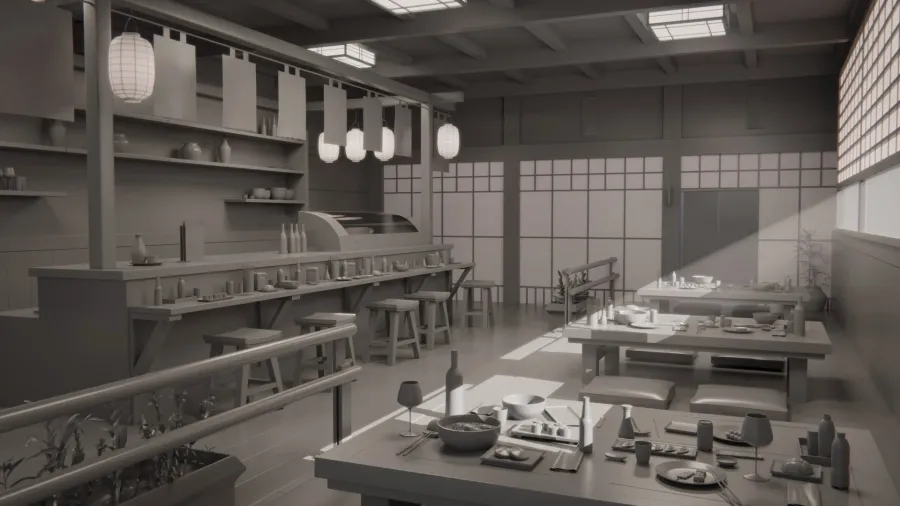
For the set dressing, I worked from the references I had collected, arranging the furniture, tableware and other objects throughout the restaurant. I adjusted the placement and composition of the different areas as the scene developed.
3. Final Presentation
I prepared several renders in Maya and Arnold to present the environment, working on the camera angles and lighting to show the different areas of the restaurant. I used temporary materials to make the architecture, props and overall composition easier to read while the final texturing was still pending.